Skip navigation

I was born, raised, and spent a size-able portion of my life thus far in a steel town in Northeast Ohio. Lorain is hardly the teeming, creaking metropolis that much larger New York City is, but it has a bit of a reputation among the cities nestled on the Ohio portion of Lake Erie. Talk about Lorain here and you’re talking about a dark place, a haven for crime and uncontrollable drug abuse, a blot on the Ohio map writhing with poverty and violence. To say you’re from Lorain in Northeast Ohio is to say that you’re a thug–you’re no stranger to gang violence, larceny, gun play, cocaine and crack. A perusal of Lorain’s police blotter is a walk through a land where the inhabitants routinely steal from one another, beat one another and in many cases kill one another, the whole time maintaining a drug economy that includes traffic in, alarmingly and increasingly, hard drugs like heroin, and heroin’s prescription brethren: Oxycontin, Vicodin, Codeine.

To some extent Lorain deserves this reputation–but as is usual in these cases the reputation tells only a smidge of the actual story. Having grown up and lived in this city, I can say that I witnessed both the highest and lowest poles of the human experience there. The city was crucial in the formation of who I am; so, in 2010, when I left Lorain and moved to Western New York, I brought with me a world-view that had been forged in the fires of an economically-depressed, crime-sick hometown.

Western New York is an alien world to someone who grew up with realities like kids shooting other kids. The area is wild, wooded, strewn here and there with sprawling farms. In Autumn, the harvest season, the air is soft and redolent of bubblegum–the grapes have ripened. As far as the eye can see green hills roll. Most people don’t lock their doors.

To not feel hemmed-in by houses and convenience stores and cash-checking joints was disorienting at first. For some years in Lorain my family lived in the King George Apartments on Washington avenue. Right across the street was George Daniel field. There was a brief period after high school, while mulling over what direction to go in, unemployed (like such a large percent of Lorain is now), when I would seek out the space George Daniel field offered, sleepless, at three or four in the morning. There, in the dark, surrounded by nothing but grass and the occasional jarring cry of night birds, I found a peace that would prove to be essential to me in years to come. I had slipped from the grid, and by grid here I don’t mean the economic and material confines of surveillance society; I mean grid in a more literal sense, in the sense of how cities are planned out, how suburbs look from above. In any grid there are defined paths and the presence of something else; in a city this something else is unwalkable space (at least if you stay within the law). In the city, this something else is other people’s yards, or places of business; you’re not supposed to walk there. You’re supposed to walk on the sidewalk. You’re supposed to walk in these lines.

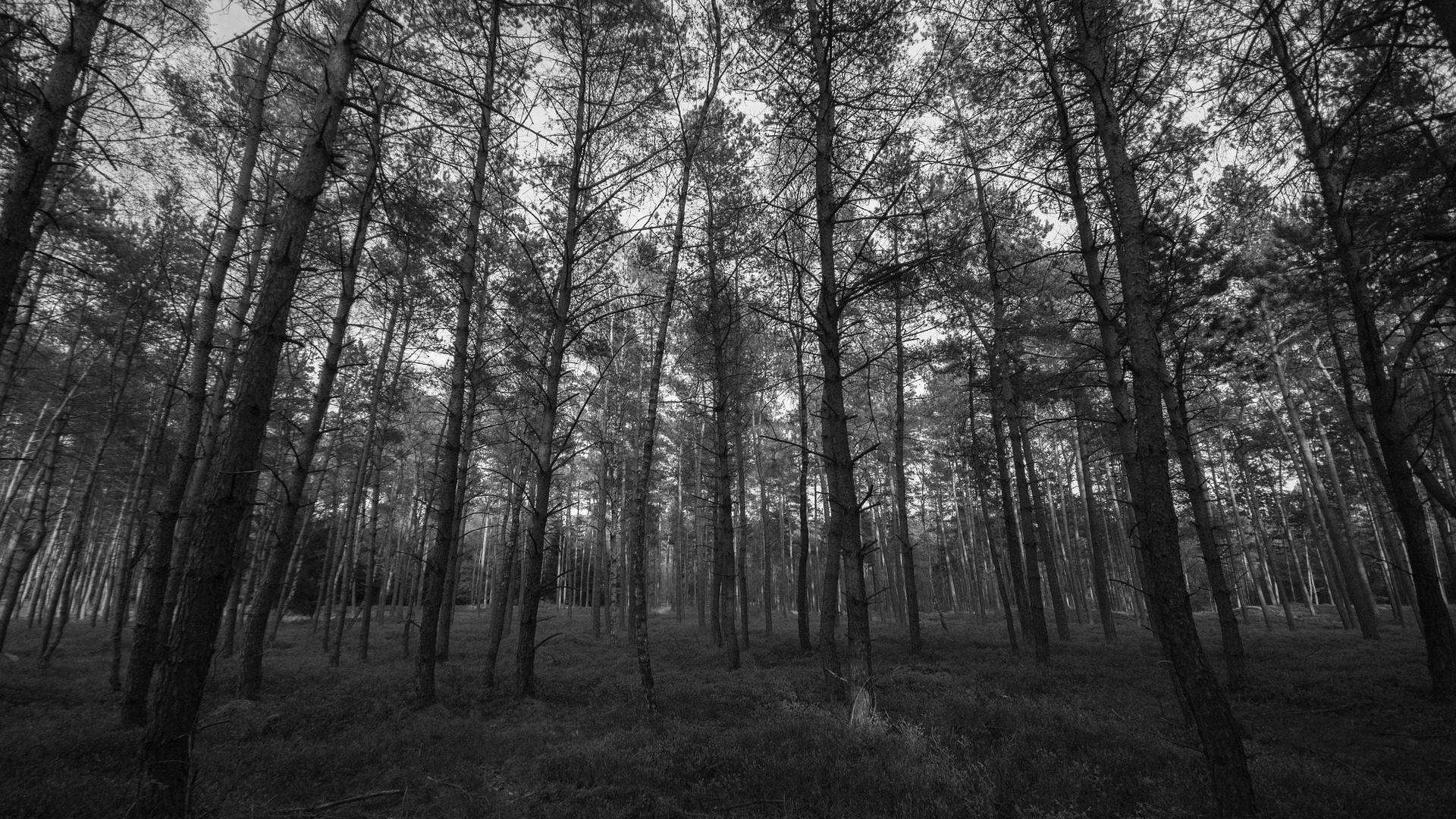
Living in Western New York, in the forest, there is first the confusion that you can walk everywhere–that the grid has only lightly been traced on this land, which is amazing considering how long Europeans have been walking back and forth and doing business on it. This confusion stems for me from not having ever been in want of prescribed paths. Granted, this is only a city boy’s first impression of the forest–real wisdom would tell this fool that, yes, there are prescribed paths in the forest: trails animals have used season after season, to water and choice grazing. But for the most part, walking through the forest, one has to ply one’s own path out of the brush. And that is how the world opens up for me.

A life of prescribed paths would seem to restrict possibility. In the city, the possibilities in one’s material and social life may seem abundant, and may indeed be more abundant when viewed through the eyes of an eager capitalist. But on a very realistic everyday level, one’s life is severely constrained. You know where you’ll be walking–there are only so many places to walk! But here, in the forest, where the traces of history pile up one on another, where, without tending and careful stewardship, paths become overgrown and disappear–you must find your own place to walk. And here too I become aware of the responsibility I have to where I put my feet.

A year of poems here.
The Willow and the Living God: Poems, 2010-2011 by Lewis LaCook